Protected content ahead.
Please reach out for access.

Pearson
Unifying a fragmented skilling ecosystem
Co-Lead Product Designer
6 months · 2024–2025
Vision Strategy / Platform Consolidation / Multi-Stakeholder / B2B EdTech
Challenge
Pearson is a trusted leader in professional certification, but they wanted to go further, expanding into the broader skilling market and owning the full learn-practice-certify journey. The problem was their existing products weren't meeting user expectations. Learning, practice, and certification lived across disconnected platforms with no unified user journey.
Solution
Through research, stakeholder workshops, and design, we unified 17 fragmented platforms into a single skilling experience built around three user types — learners, instructors, and admin buyers.
Impact
The result was a North Star vision, a validated prototype, and a multi-year roadmap that shaped Pearson's product strategy. That vision shipped. It's now live as the Pearson Skilling Suite.
My Role
Over six months, I partnered with another senior product designer to lead a strategic design engagement unifying Pearson's skilling journey.
Together with a strategist, we drove the work from research through testing.
Mapped the ecosystem and current-state journeys across 14 platforms
Established a unified taxonomy framework to consolidate overlapping products
Co-defined the future platform vision and end-to-end experience
Designed the North Star admin prototype that shaped the multi-year roadmap
Led user testing and validation for the learner persona
Supported the multi-year roadmap by synthesizing testing data and surfacing priority insights
Pearson came to us with a clear question:
What should a truly unified end-to-end skilling experience look like?
Discovery - Process
We started with a six-week discovery to map the Pearson ecosystem.
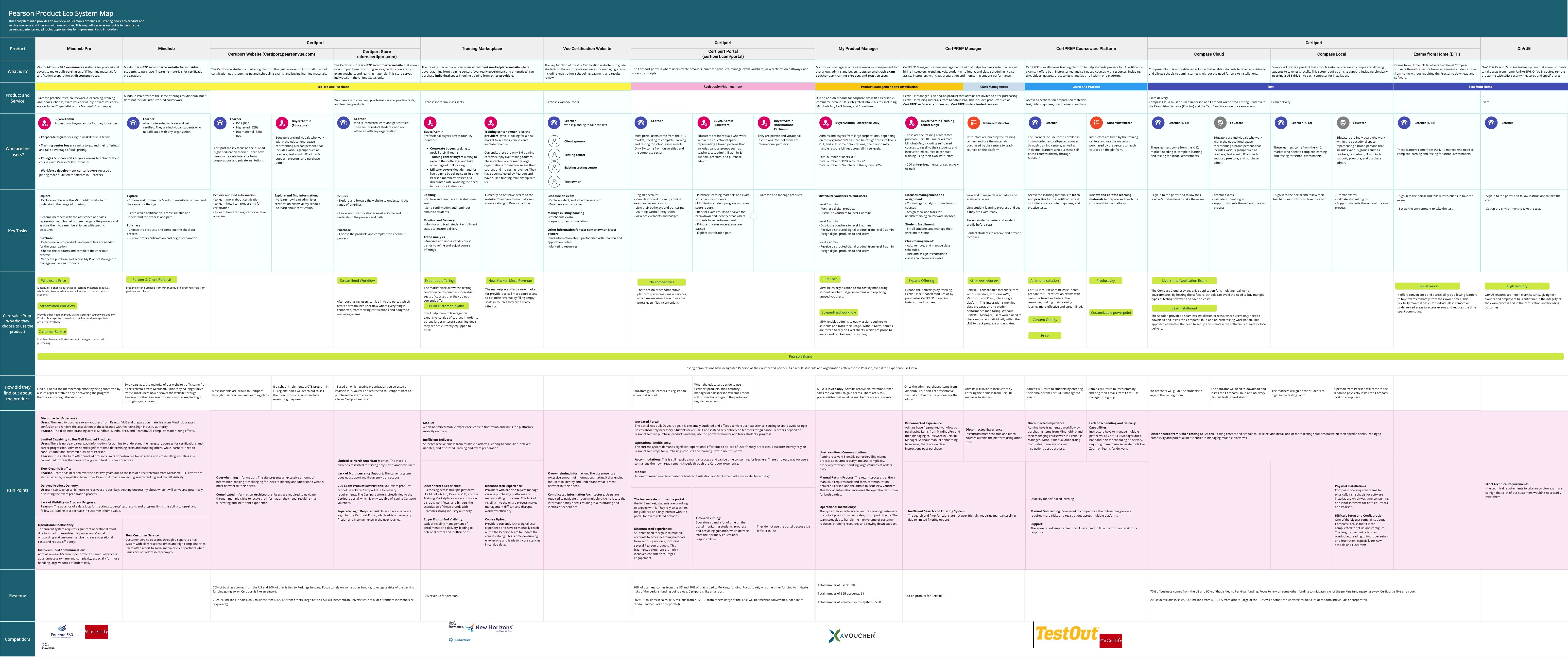
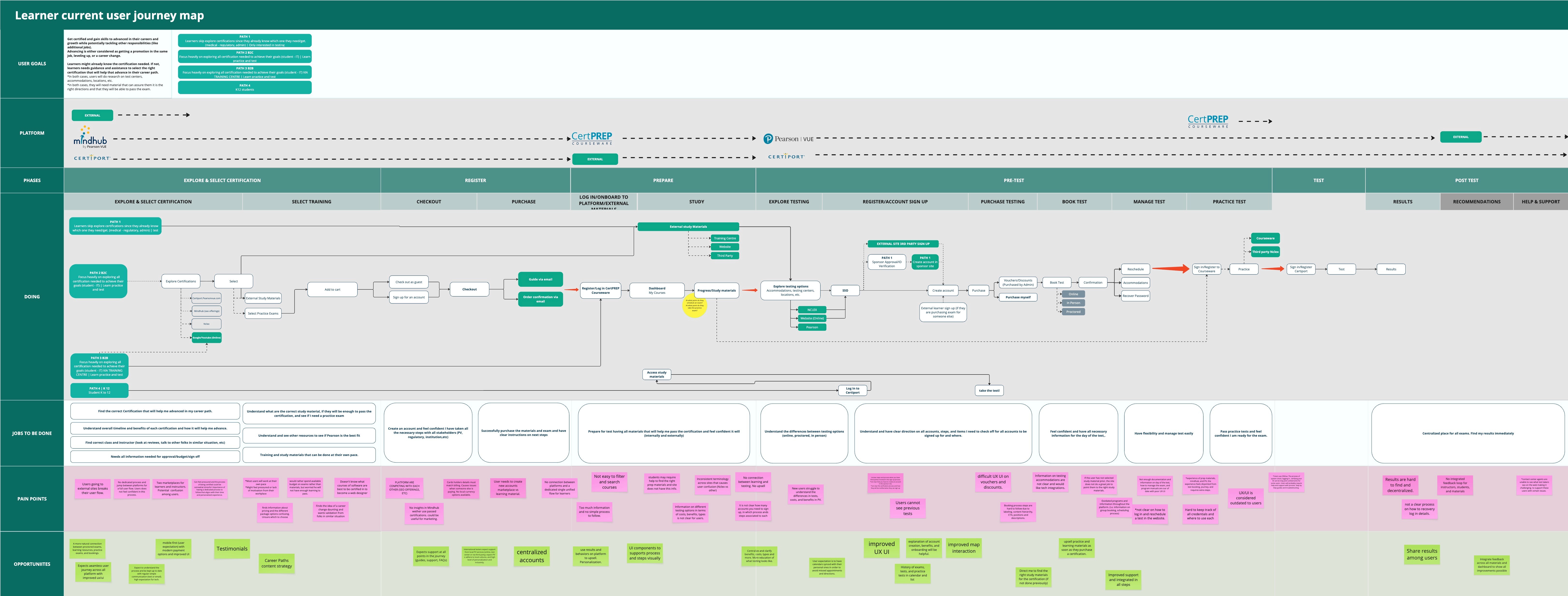
My designer partner and I reviewed 30+ existing research reports, audited 14 platforms, and interviewed 8 product owners to build a system-level view of how the ecosystem fits together.
A snippet of the discovery board
User journeys
Personas to products
Ecosystem
Discovery - Findings
Pearson VUE's ecosystem spanned 17 platforms with solutions that overlapped across the journey.
To complete a single end-to-end journey, each persona had to navigate across up to 7 disconnected platforms, each with its own login, interface, and rules.
Here are some of the discovery artifacts
View
Discovery - Underlaying Pattern
Discovery - Flipping the Lens
Discovery - Reimagining the Future State
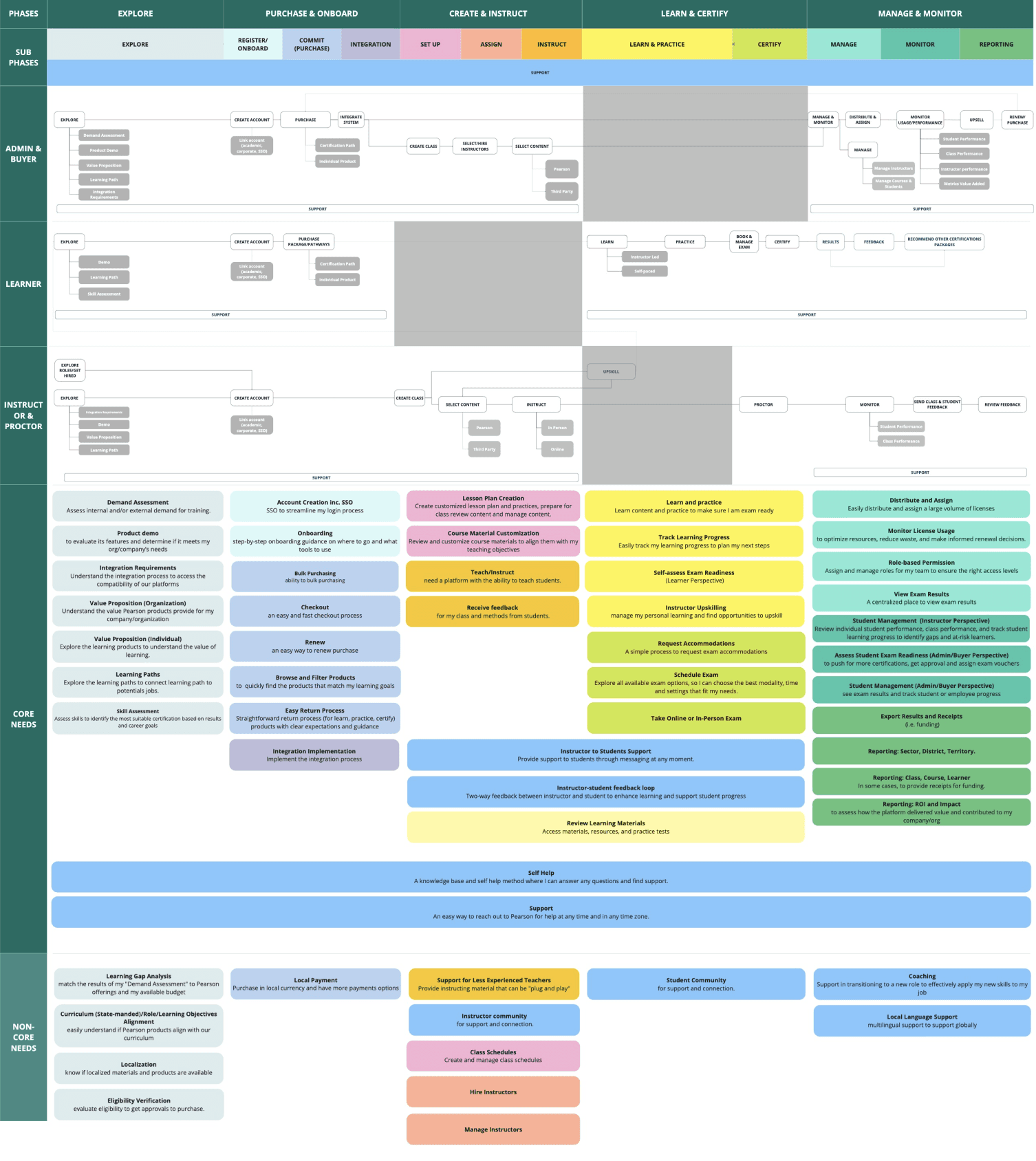
Applying this outside-in lens, we designed the ideal ecosystem in detail.
Working from the shared jobs we'd identified, my design partner and I shaped them into the core functionalities and pillars that became the platform's structure, then mapped how each persona moves through it end-to-end.
Design
In 12 weeks, we brought the vision to life through a North Star prototype.
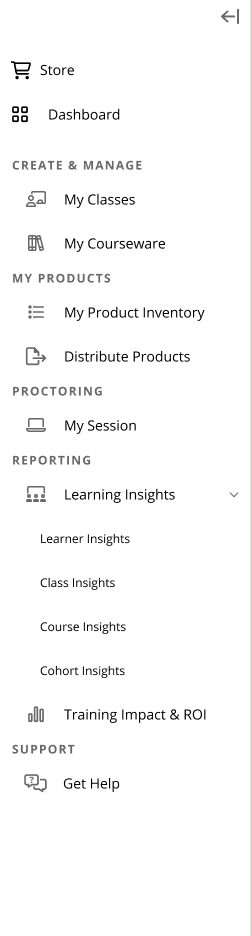
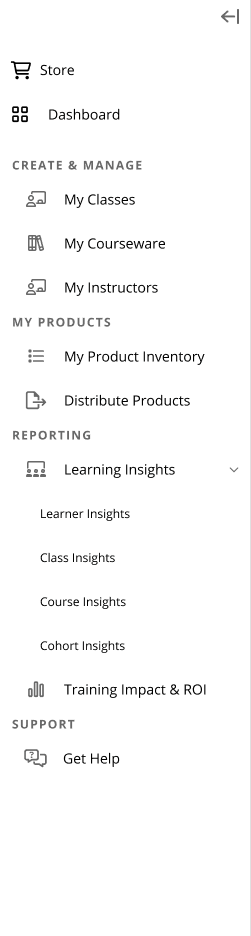
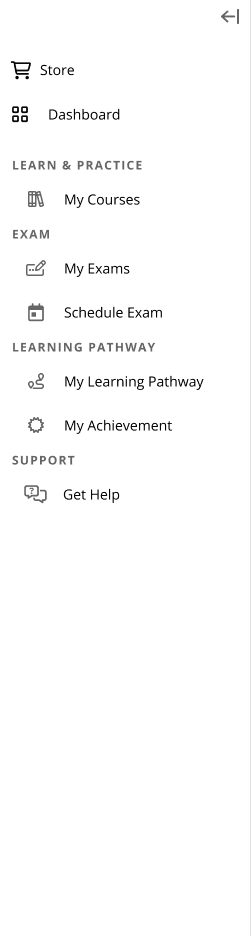
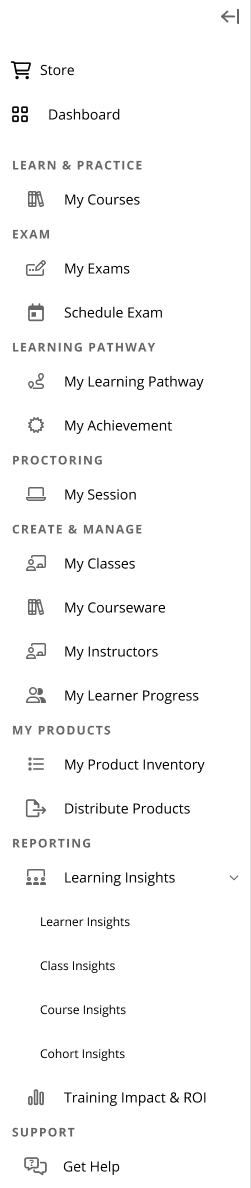
My design partner and I designed end-to-end experiences across three core personas, establishing a shared foundation for information architecture, navigation, and product taxonomy, showing how each persona could move through a single platform to meet their needs.
I put together the overarching prototype structure that brought all three personas into one connected experience. Together, we ran a weekly design review workshop with stakeholders to iterate, refine, and align as the prototype evolved.
User journeys
Personas to products
Ecosystem
Testing
We validated the vision through user testing.
To understand whether users resonated with the unified experience, each of us took on one persona for user testing with 18 participants across personas. Every session began with a prototype walkthrough, followed by a short survey rating each feature and page on a 1-5 scale.
The findings confirmed strong demand for a seamless end-to-end experience and were vital in prioritizing features. Just as importantly, the data helped move product conversations forward, giving teams confidence that a unified solution was both intuitive for users and viable despite the complexity underneath.
Here are some of the discovery artifacts
View
Planning
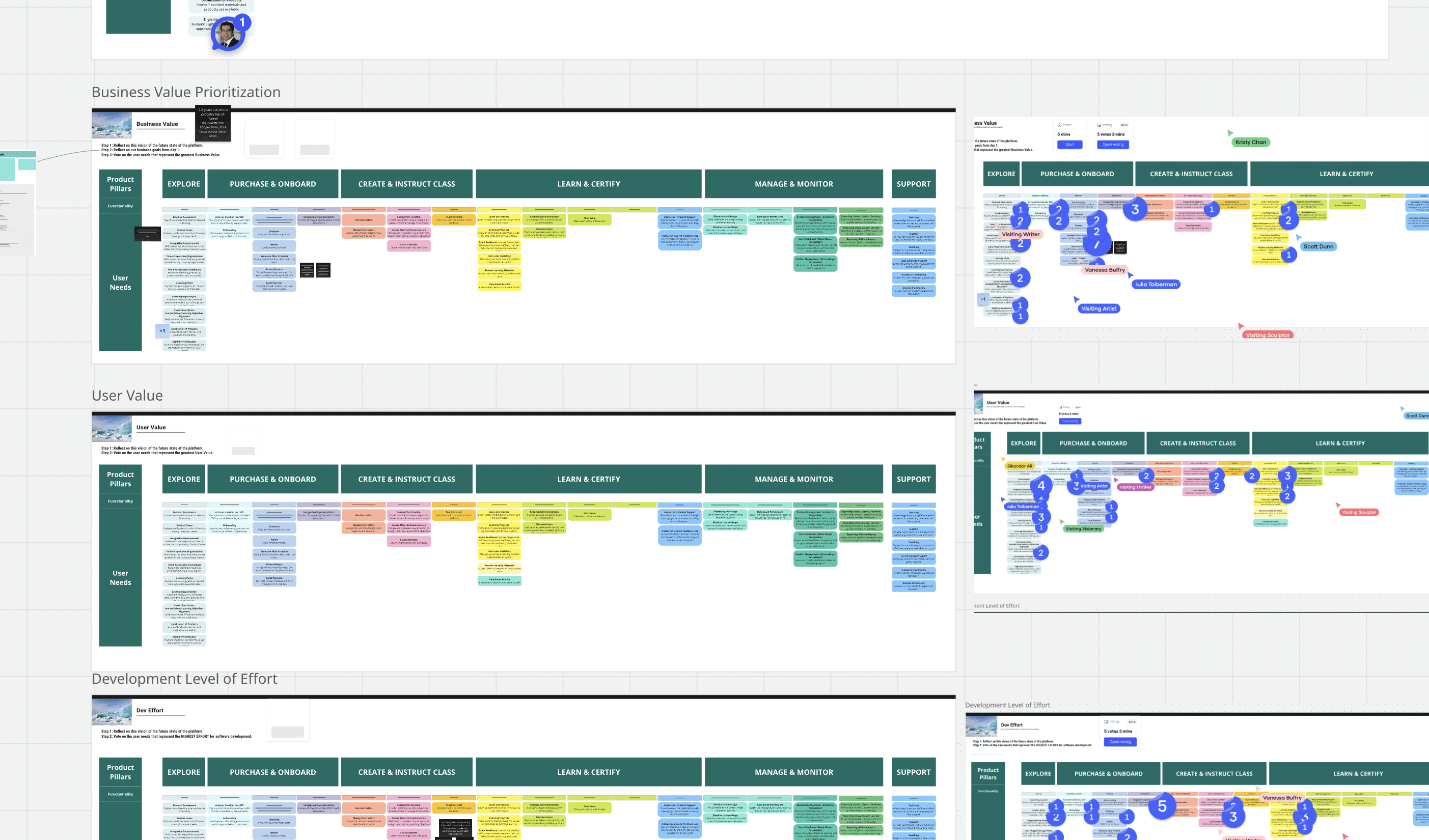
We translated the findings into a prioritized roadmap.
To close the engagement, the strategist translated the unified vision into a multi-year product roadmap, with features evaluated across three dimensions: user need, business value, and implementation effort. I supported by synthesizing testing data and surfacing the priority insights that anchored the sequencing.
The result was a focused, actionable path from the current fragmented state to a unified platform.
Here are some of the discovery artifacts
View
Impact
The system we defined continues to shape how Pearson builds.
The NSV vision was ambitious, and it's still in flight. But the prototype and the framing behind it changed how Pearson approaches products. The job-shaped framing, core jobs, and unified taxonomy still anchor how new features get scoped and how product teams plan today.
I've continued with Pearson as design lead on follow-on projects, helping automate and streamline workflows across the suite. Watching the framing we introduced shape decisions on every new project has been the most rewarding part of this work.
For me, it also confirmed that the highest-leverage design move on a fragmented system isn't more UI. It's a better mental model for how the system fits together.
Here are some of the discovery artifacts